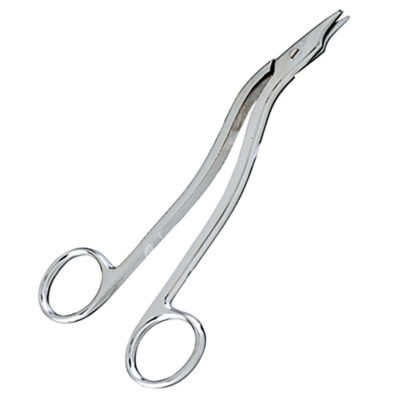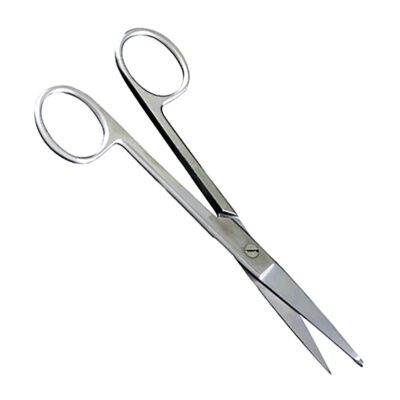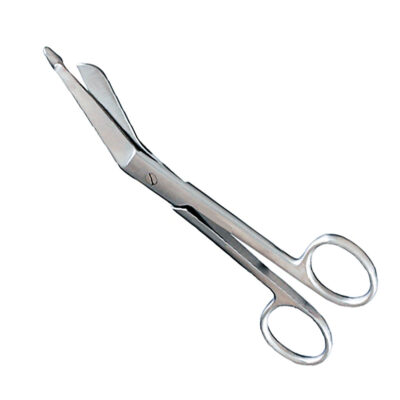
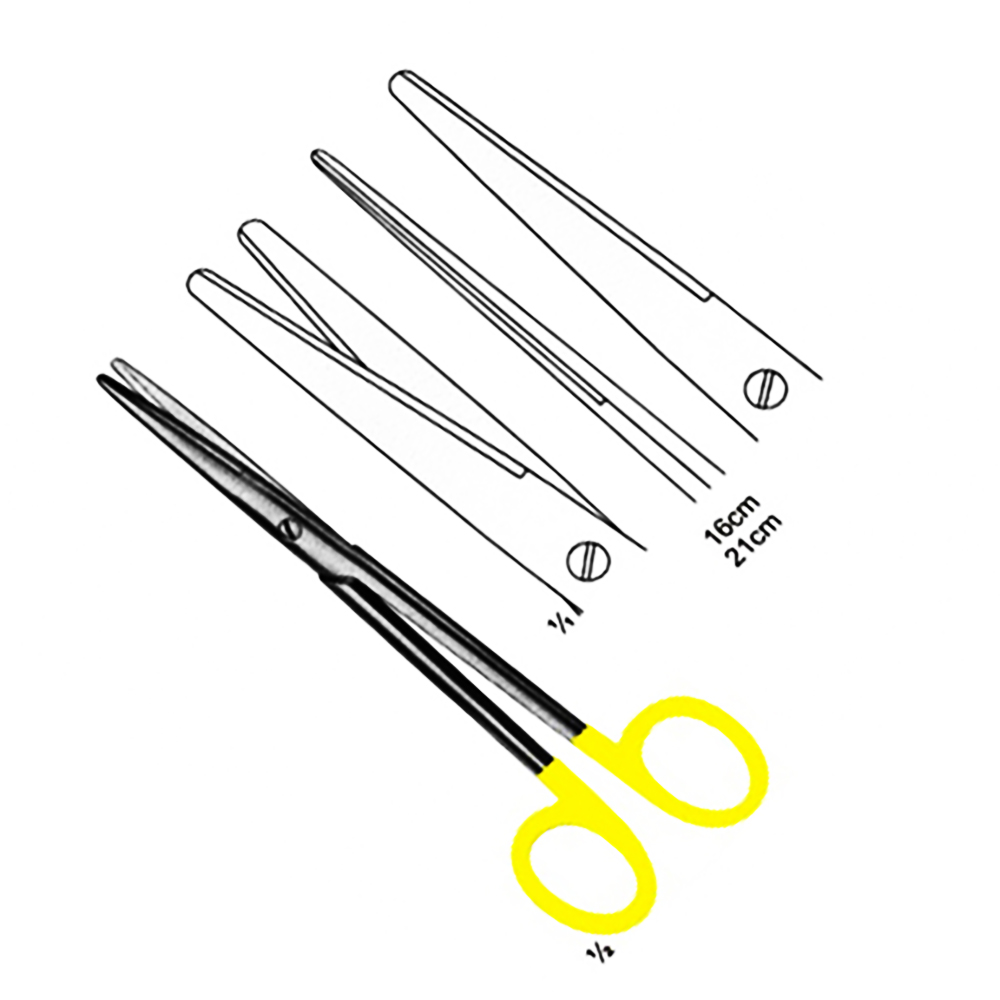
Stainless Steel: The most common. Alloyed with chromium (and often nickel) so that it forms a passive film that resists rust/corrosion. High quality stainless steels (e.g. surgical stainless steel, martensitic stainless steels) are used.
Surface treatments:
Passivation: a chemical treatment that enhances the chromium/nickel oxide layer to improve corrosion resistance.
Polishing/grinding to reduce microscopic crevices.
Occasionally coatings (e.g. titanium nitride) for extra protection and/or cutting performance.
Design for sterilization: Able to withstand high heat (autoclave), cleaning agents, repeated usage without deterioration.
Long lifespan: less corrosion → less pitting, better edge retention.
Hygienic: rust is a hazard; preventing it lowers risk of contamination/infection.
Maintains precision: sharp edges and stable joints critical for surgical performance.
Easier maintenance: less frequent sharpening or replacement.
Cutting sutures.
Dissecting soft tissue where straight incisions are needed.
Work on surfaces or being close to skin/wound edges.
General surgical procedures where curved scissors might not be required.